Civil Rights Teaching

test widget

  • Home
  • News

Freedom Summer and Ferguson, MO: A Special Presentation

December 21, 2014 by Deborah Menkart

On December 5, 2014, New American NYC, in collaboration with the Schomburg Center for Research in Black Culture, held a special event on Freedom Summer and Ferguson, MO. The announcement explained:

Today, fifty years later, with the Voting Rights Act under siege, daily reports of police brutality and racial inequality seen in all realms of American life, we take a look back at the struggles for civil rights and social justice and look at the barriers that still endure.

They began by showing clips of the film Freedom Summer side-by-side with videos from Ferguson, MO.

This was followed by a conversation with Stanley Nelson, film director; Khalil Muhammad, director of the Schomburg Center for Research in Black Culture; Dorie Ladner, SNCC veteran from Hattiesburg,Miss.; and Arlie Schardt, former TIME correspondent.

Here is a short clip of Ladner describing her response to the long trajectory of oppression.

Here is the full program, including the clips from the film Freedom Summer and the scenes from Ferguson.

The photos are by Sade Joseph and the video clips by Tatiana McCabe, Gregory Maher, and Mike Pagano. The photos and videos clips were made available by New America NYC.

Filed Under: News Tagged With: Freedom Summer

Uncovering Mississippi’s Hidden History: How to Participate

October 23, 2014 by Deborah Menkart

All too often students learn about national heroes and not the people in their own state and communities who have made history, behind the scenes.

Now students and teachers have a mechanism for teaching others about Mississippi people’s history, beyond the headlines.

crt-history-pinWhere can you find this history?

  • Personal diaries and letters.
  • Photographs.
  • Newspapers articles.
  • Songs.
  • Fliers and commemorative brochures.
  • Oral history interviews.
  • Gravestones.

The pins can include photos of sites of historic note that you walk by every day and stories from people in your community.

What History Should I Pin?

Highlight a story in Mississippi history, with a preference for stories that are not well known and that reflect the role that every day people play in shaping this country.

While the emphasis will be on stories and images posted by Mississippi students and teachers, the project page is open for anyone in the world who would like to post.

How Can I Pin a Photo or Story?

It is very easy to add content to the map. Here is how:

  1. Create a Historypin profile for yourself, your classroom, or your organization
  2. Check out the How-To Guides to get familiar with Historypin.
  3. Go to the Mississippi project page and click on “Pin your memories.”

Filed Under: Uncategorized

An Epitaph That Keeps Giving

October 14, 2014 by Deborah Menkart

We are pleased to share with you the speech delivered by Timothy L. Jenkins on June 27, 2014 in the memorial plenary of the 50th Anniversary of Freedom Summer convening. Hundreds of people of all ages gathered for this historic event at Tougaloo College in Mississippi. The plenary session, convened by Judy Richardson, was called “In the Mississippi River.”

By Timothy L. Jenkins

I have worn many titles over the years — counselor, professor, trustee, university president, governor of the Postal Service, and erstwhile radical emeritus. But none is greater than that of a SNCC organizer in Mississippi. I thank you, Judy Richardson, for reminding me of who I once had the honor of being.

Go Tell It On A Mountain, over the hills and everywhere. Joshua Fit the Battle of Jericho, and the walls came tumbling down. O’ Mary, Don’t Cha Weep, Don’t Cha Moan, pharaoh’s army got drownded. We’ve Been ‘Buked And We’ve Been Scorned, we’ve been talked about sure’s we born. But We’ll Never Turn Back, we will go, we shall go to see what the end will be. We’ve Been In The Storm So Long, but The Storm Is Passing Over. This May Be The Last Time, we don’t know. Let us earn the right to sing — Lord We Done Done What Cha Told Us to Do. — These are the hymns of the Movement from the souls of black folk.

TLJwBanner50thFreedomSummerforTfC-765x1024

This week’s commemorative coming together in Jackson, Mississippi, is to acquaint the larger world with living men and women of whom it may read, but soon will no longer hear or see and to remind us all of those who paid the ultimate price for engaging themselves in this struggle for equality. In Freedom Summer, we moved beyond human rights as sentiment to translate those rights into moral action. While some warned my brother, Charlie Cobb, “This nonviolent stuff’ll get you killed,” we ceased to view disciplined morality as a parallel universe to politics and commerce. Our triumph was to have successfully entered into the sufferings of others as though they were our own. Our pledge was to end white ignorance concerning all that was everyday black knowledge. And that struggle continues fiercely in the high and low courts of our land as well as in the hearts and minds of the people.

Freedom Summer invoked not only the fears of pain, injury, starvation, and predictable danger but embedded the profound awareness of our own mortality and that of our brothers and sisters. That both dreads were overcome was a testament of the durability of hope, and the strength of the songs that carried us through on their waves of light. That summer was a collective moment when a small band of converts viewed the legacy of their acts as equally important as their lives. This work experience provided proof that all energy is, as the scientist had promised, truly indestructible! And it proved what had been prophesied that everywhere that love has gone, is still and ever lit with light.

We invested our gift of youth in the wager that what we ought to be, goes beyond our knowledge of what we are. There is neither the beginning or an end of Freedom Summer. The changes going on then were similar to those that had occurred in the past. And forces, social and political, still at work in the present are exactly the same as those immemorial. Freedom Summer like abolition and the Civil War before simply laid another axe at the root of the inequality tree.

The revealing time we spent in Mississippi taught us that legalisms encourage fictions under which injustice breeds, selectively allowing the law to be made a cloak for malice. Our mission was to convert people from subjects to citizens. The former are governed by a superior’s will, the latter by a superior law. We urged against the people’s fear of political rulers to instead have political rulers come to fear the people.

Freedom Summer was not political form over substance, it was political form transformed into substance. This made it the summer that must not be forgotten. Those who shared our season expressly rejected the unwisdom of Ayn Rand’s “never live for the sake of another man” in favor of Mandela’s, “now is the time to stand together against those from any quarter who wish to destroy the freedom of all of us.”

This is an occasion of remembering for the future symbolized in the Adinkra emblem of Sankofa — a ceremonial design depicting a bird in full forward flight with its head turned back to never forget from whence it came as a guide to tomorrow’s youth. This intergenerational conference is our collective Sankofa moment.

Lest we forget, it is easy to glorify the uniqueness of the sun, when one’s eyes remain ignorant of the larger constellations of which it is but a minor player. So let this be an occasion for a more honest perspective than the narrow lens of popular history which only gives focus to a few faces and names, while ignoring the broader universe in which they were at best a minor part and but an abbreviated moment. Let this be a time to allow we few, we seldom known and happy few, who early answered the summons into the breech to have the larger community, at long last, reflect mindfully and soulfully on those who once were party to our ranks, who remain still and ever keepers of the flame, wholly worthy of the nation’s praise as any of its bemedaled soldiers in arms.

Sprung by and large from the nurturing soil of the social strength which is the South, their entitlement to freedom was innate and not to be denied or held hostage by the threat of opposition or even death. Their insight was stronger than their eyesight. They saw beyond the narrow Now to perceive a wide Tomorrow. They knew life should be made more than they had been allotted even at the price of ultimate sacrifice and they understand that tomorrow never dies!

Shakespeare lied when he said, “The evil that men do lives after them, the good is oft interred with their bones.” The good of our silent comrades remains incarnate in the happy giggles of youngsters swimming in a welcoming public pool, in the pride of elders repeatedly casting ballots without intimidation or molestation, and in common citizens fearlessly and loudly denouncing hypocrisy and public theft of any and all colors, against any and all odds and in the face of any and all pretense of power. Even without knowing their names, the nation must remember the good which was accomplished by their lives and not extinguished with their last farewells.

FreedomSchoolHollySpring
A Freedom School in Holly Springs, Miss. (AP Photo/Michael Clurman)

[At this point, Jenkins paused while a video of the “Heroes and Sheroes” who had passed was played with the names scrolling and photos where they were available. Then a young man and woman of the youth group took turns reading the names of those who had been murdered in the late 50s & 60s, showing on the screens the photos (if available) and whether there had been convictions for the murders or not. Then C. Liegh McInnis performed “For Freedom Summer,” shared here with permission in text-PDF and on YouTube. Then the Freedom Singers sang.]

The ancient Egyptians prophesied that the recitation of a departed’s name would invoke their life anew. In keeping with that time-honored precept it is fitting that we call the roll of our separated during this gathering that may well be the last time we can all do so together. Befittingly we now project and enlarge their images before our eyes and in our hearts on the theater screens here at Tougaloo to underscore the immensity of their gifts. As the cameras roll, look on with wonder this one more time at the ‘sheroes’ and heroes it was our honor to know . . . .

We can never forget their work, their cheerful camaraderie, and their faith in things larger than themselves. We tell them rest not in peace, but rest in triumph. Shame be to us, if while we still know life we ever abandon the sacred trust of your remembrance. You will not sleep alone, nor without special honor from we, your spared sisters and brothers in the struggle.

There is a stubborn mythology, dare I say, theology, that all of the historic giants have been ten feet tall. But as Howard University’s Mordicai Wyatt Johnson would remind, “T’is not so.” This is our occasion to lift up the faded little giants to their deserved stature as paragons of courage, humility and silent sacrifice worthy of the big screen and the Broadway stage, or better still, hymns of praise in quiet, heartfelt moments of reflection, admiration and sobriety by all who believe in freedom. The lemon juice collecting in our eyes on this occasion is not of mourning, but celebration of how our hearts did burn within us as we walked with them along the way.

Let this be the counter-memorial day to that of the World Wars against the so-called “greatest tyranny the world has ever known.” We stage this tribute without any perverse theatrical fanfare of military drills and the ceremonial awards of purple hearts to sing and extoll unspeakably violent exploits against those with other flags. On the contrary, our warriors came only in peace and refused enemy status even to their foes.

This coming together at this time and this place is when we get to stand up in anthem to our combat corps, who did not just dream dreams for themselves, but protected and realized the dreams of others. Who better to play Taps for such warriors, if not we ourselves, who walked with them along the way during that Summer that must not be forgotten?

Let freedom ring as long as we have tongues to teach and hearts to hear and feel the honest gift of their lives.

That concludes the previously-approved King James version of my eulogy to the past.

Now I hear the whispering voices of my elder brothers, Vincent Harding and Martin King saying, “But Timothy, you mus’nt stop there without a Revised Standard Version of a eulogy for the future to ask the primordial biblical question raised in Ezekiel 37 — ‘Can These Dry Bones Live’?” To not say more in response would only lay a verbal wreath at the foot of our venerable heroes’ names and walk away. To avoid such criticism, we must do more than craft a rhetorical wax museum like that of Madame Tussauds — exact in detail and utterly without the breath of life. Instead the dry bones of our departed must be given life anew through us as a living eulogy for the future.

Third from left, Myles Horton, William Miller, Joyce Ladner, Dave Dennis, Bob Moses, and Lawrence Guyot. 1964. From Wisconsin Historical Society.

That can only be done if we and each and every one of those coming after us with similar beliefs picks up at least one project of a departed hero to make it our own.—And in keeping with the credo of SNCC, one can never ask of others what one will not do one’s self.—I share with you then, my pledge upon hearing that Lawrence Guyot was no longer with us. — That unwelcome news didn’t surprise me in and of itself, rather the surprise to me, as well as Dick Gregory, was that a person of his fierce and outspoken antagonism to perverted power had died a natural death and of natural causes.

Guyot was especially endeared to me after my suffering an, albeit benign, form of extraordinary rendition at his hands one summer day when he bundled me into the back seat of a car in front of my home and drove me straightaway to Orangeburg, South Carolina to join in the first Obama presidential campaign. There we were walking the steamy streets of Orangeburg and knocking on doors the same as we had done decades before as little more than boys on the streets of Greenwood, Mississippi. Have mercy, it was one thing to follow a seven AM to eleven PM workday in the sixties, but it is quite another having to do so in your own sixties! However, we couldn’t help being motivated to push on when we learned that the HBCU students of Orangeburg State and Voorhees Universities knew nothing of the Orangeburg State Massacre of yesteryear that had shocked the nation during the height of the original student movement. “Old sheep they know the way, young lambs they got to learn.”

That dramatic discovery led Guyot to redouble his educational commitment by inspiring and relentlessly devoting himself to liberate subsequent generations of young people from their innocence on the requirements of history and liberation struggles. Once I learned he was gone, I vowed to pick up his advocacy of the textbook, Putting the Movement Back Into Civil Rights Teaching and I joined the sponsoring board of Teaching for Change to continue his outspoken advocacy. I could do no less.

Timothy Jenkins speaking at the closing ceremony in remembrance of Ella Baker on July 29.

And you should do no less by committing yourself to some unfinished task of at least one of the heroes we have lionized here as your personal oath. We each owe this as our affirmative answer to the divine question, “Can These Dry Bones Live?” Let us each take the baton from a frozen hand to answer that searching question by continuing their race as in an everlasting relay. Then when the final chapter of our lives is written, perhaps we will be able to join them in saying, Lord, I Too Done Done What Cha Told Me To Do!

Let all who believe in freedom and are committed to abundantly fulfilling the future through these heroic names join in a resounding and collective, Amen!

Printed here with permission of the author.

(c) Timothy L. Jenkins, 2014.

Filed Under: Uncategorized

Turn-of-the-Century Mississippi Social Studies Teachers Workshop

September 26, 2014 by Deborah Menkart

Mississippi teachers are invited to attend a full day of presentations and workshops on “Turn-of-the-Century Mississippi” on November 7, 2014 sponsored by the Mississippi Department of Archives and History (MDAH). The conference announcement explains that,

The coming of the twentieth century saw great changes throughout the state—social, economic, and industrial. Mississippi’s constitution was rewritten and adopted in 1890 to codify the privileges of white men and institutionalize the impediments to women and African American citizens. The United States and Mississippi were drawn into a world war. Natural disaster ravaged the fertile Delta counties. And a new, native art form was born in the blues.

People get around in boats at the railroad station in Cary, Mississippi, on May 1, 1927, ten days after the flood. Courtesy MDAH.
Cary, Mississippi, May 1, 1927, ten days after the flood. Courtesy MDAH.

The sessions include:

  • Political analyst Jere Nash, “The 1890 Constitution and the Rise of Jim Crow Mississippi”
  • Mississippi Armed Forces Museum director Chad Daniels, “Mississippi in WWI”
  • University of Southern Mississippi associate professor Pamela Tyler, “Woman Suffrage in Mississippi”
  • MDAH outreach programs coordinator Claire Gwaltney, “1927 Mississippi Flood Lesson”
  • Mississippi Arts Commission arts education director Charlotte Smelser, “Blues in Mississippi Curriculum”
  • State Capitol curator Brenda Davis, “Mississippi’s State Capitol”
  • MDAH reference librarian De’Niecechsi Layton, “Genealogy in the Classroom”
  • University of Southern Mississippi associate professor Deanne Nuwer, “Watering Places along the Mississippi Gulf Coast: The Roaring 1920s”

The event will be held at the Old Capitol Museum in Jackson.

The workshop is sponsored by Mississippi Department of Archives and History in conjunction with the Mississippi College School of Continuing Education, Mississippi Department of Education, and Mississippi Historical Society.

Filed Under: Mississippi, News

Mississippi Civil Rights Movement and Labor History Teacher Fellowship

September 16, 2014 by Deborah Menkart

The Mississippi Civil Rights Movement and Labor History Teacher Fellowship was launched in 2014. The goal is to build a sustainable statewide learning community of classroom language arts, social studies, and history teachers in grades 6–12 for teaching hands-on, inquiry based U.S. history through the lens of race and class in Mississippi history.

The partners for this effort include: Mississippi State Department of Education, the Civil Rights & Social Justice Initiatives at Tougaloo College, the Fannie Lou Hamer Institute, the COFO Civil Rights Education Center, the William Winter Institute for Racial Reconciliation, Veterans of the Mississippi Civil Rights Movement,Inc., International Museum of Muslim Cultures, the Margaret Walker Archives at Jackson State University, the Right Question Institute, Mississippi History Day, and the University of Southern Mississippi.

WKKF_BW_logo_reversedThe funding for the fellowship program is provided by a grant from the W.K. Kellogg Foundation to Teaching for Change called “Nurturing a Teacher Learning Community for Student Achievement and Civic Engagement through Mississippi History.”

Mississippi teachers can learn more and apply here.

Below are the teacher fellows selected in 2014.


[ezcol_1third] crt-glendolyn [/ezcol_1third] [ezcol_2third_end]

Glendolyn Crowell

Social Studies in Attala County

Glendolyn Crowell teaches at Kosciusko High School in Kosciusko, MS. She has been teaching for 20 years focusing on U.S. history over the past 10 years. When teaching about the Civil Rights Movement, Crowell realizes the difficulty in introducing sensitive material to her students, but doesn’t shy away from it. She states “I do not want to be a part of the problem, I want to be a part of the solution that brings all races together for the betterment of our society. I want to help my students understand and confront the unpleasant acts of the past to help them gain strength to move into the future.”

Crowell focuses on using primary documents in her classes. She wants to represent real life stories that her students are interested in hearing. Crowell wants to attend the institute in order to, “gain knowledge to present interesting, engaging, innovative lessons to “spur” the interest of my students so they when they leave my classroom each day, they cannot wait to come back the next day.”

[/ezcol_2third_end]


[ezcol_1third] history-teacher-Jessica-Dickens [/ezcol_1third] [ezcol_2third_end]

Jessica Dickens

Social Studies in Attala County

Jessica Dickens has been teaching for six years and has spent the last three of those years in the Kosciusko School District. Dickens uses primary documents as the foundation for classroom debates to discuss issues of race, class, and U.S. history as a whole.

This was evident in an activity about the dropping of the atomic bomb. Dickens states, “Using a lesson involving the dropping of the atomic bomb, I used primary source documents from the Stanford History Curriculum. Students were in small groups, read the documents, took notes using a graphic organizer, then had a debate on whether the bomb should have been dropped or not. As the debate progressed, students changed sides, as their opinions changed. At the conclusion of the debate, students had to write a short essay coming to a consensus while highlighting both sides of the argument.

“Using history to understand the social issues of present society is my passion. To try to help students also feel passion about society’s ills is my intention. When passion and knowledge combine, students care to learn, and are equipped to improve society once they leave my classroom and graduate from high school.” [/ezcol_2third_end]


[ezcol_1third] [/ezcol_1third] [ezcol_2third_end]

Susan Nail

Social Studies in Attala County

Susan Nail teaches at Kosciusko High School in Kosciusko, MS. She has been teaching geography, Mississippi Studies, and World History for seven years. Nail facilitates classroom discussions on labor and/or civil rights issues, especially those related to Mississippi. She encourages her students to step into the perspective of those being discussed; to put themselves in their shoes and walk the journey that they have walked. She stresses to her students that “it is important to be familiar with our past, in order to know what needs to be done to secure our future.”

[/ezcol_2third_end]


[ezcol_1third] Ayesha pic 2 [/ezcol_1third] [ezcol_2third_end]

Ayesha Brooks

Social Studies in Benton County

Ayesha Brooks teaches at Ashland High School in Ashland, MS. She has been teaching Mississippi studies, world geography, world history and American government/economics for eight years. Her classes focus on project based learning. She strives to help her students acquire in-depth knowledge by conducting research which makes history a lot more interesting. Ayesha is excited about all of the opportunities that the fellowship will bring. She stated, “I feel that being accepted into this program with enhance my teaching of the subject matter and in turn enhance my students willingness to learn more about our great state.” When talking about her family history, Brooks noted, “My dad made sure all of his kids graduated high school and college. I joined this fellowship for him and the many others who feel that they may not matter.”

[/ezcol_2third_end]


[ezcol_1third] crt-renee [/ezcol_1third] [ezcol_2third_end]

Renee Hooper

Librarian in Benton County

Renee Hooper has been in education for 12 years. She is the school librarian at Ashland High School and Ashland Middle School in Ashland, MS. As the librarian, Hooper ensures that the school community has the materials it needs. She states, “My role is to support the education of my students and the curriculum of the teachers with the best resources and researched information that would enhance the quality of education that is being delivered. Importantly, this support is done through the method of being knowledgeable of our history, assisting students with lessons and projects, co-teaching with teachers, and making available resources that would be valuable to the students improved understanding of our history.”

Through the fellowship, Hooper hopes to continue to add resources to both libraries in order to make each library the “heartbeat of the school.” She would like to build a strong network with other individuals and learn from their experiences in order to enhance the quality of education for her students.

[/ezcol_2third_end]


[ezcol_1third] history-teacher-Alma-McDonald [/ezcol_1third] [ezcol_2third_end]

Alma McDonald

English in Forrest County

Alma McDonald has taught at Hattiesburg High School for 14 years. McDonald believes that history should be taught to show students how the events of the past have a direct impact on what is happening today. This is done using a variety of techniques.

McDonald explains, “My students create newsletters, power points and even videos to demonstrate their understanding of a subject. They use web quests, interviews and basic research skills to seek out information for themselves. I believe in giving them guidance, but not giving them all the answers.

“Students are changing and teachers need to incorporate more creative and interesting methods to capture their attention and keep them engaged. I want to be able to give them the best instruction possible. I want them to walk out of my classroom, not just saying, ‘Hey, that was interesting’ and then moving on to the next thing. I want them to walk out of my classroom not only with an understanding of the history, but with a desire to know more and a hunger to change the world – just like those who came before them.” [/ezcol_2third_end]


[ezcol_1third] history-teacher-Tristal-Watson [/ezcol_1third] [ezcol_2third_end]

Tristal Watson

Social Studies in Forrest County

Tristal Watson has taught at N.R. Burger Middle School for four years. In her class, Watson focuses on having her students think more critically and objectively about content introduced. One example was during a unit on the institution of slavery. She states “In order to make students think more objectively, I make them write from the perspective of slaves, free blacks, slave owners, poor whites and finally, themselves. Therefore, they get a broader view and are more inclined to share their thoughts aloud when writing from another perspective. I encourage critical thinking on all levels.”

Watson is eager to share what she learns with her colleagues after the fellowship. She explains “As the 7th grade history department head, I know that I could share my experiences and new found knowledge with my colleagues and help us to become stronger as a unit. I am excited about the opportunity and would love to increase my knowledge and enhance my teaching skills through this fellowship.

“Many times, it is difficult for a teacher to really expose students to this rich history without touching on sensitive issues. However, I believe that our history is so important that it must be taught. The fellowship program will help me to get more insight into labor and the Civil Rights Movement in Mississippi and enable me to become a better teacher.” [/ezcol_2third_end]


[ezcol_1third] history-teacher-Cristina-Tosto [/ezcol_1third] [ezcol_2third_end]

Cristina Tosto

Social Studies in Harrison County

Cristina Tosto has taught at Gulfport Central Middle School for three years. She incorporates Mississippi history in relation to larger American events through the lens of race and class.

Tosto wants her students to have a solid of understanding of the world around them. “No matter what the event or time period, I like my students to explore and be aware of varying points of view.

“My perception of Mississippi and the South is from a Northern point of view. Being able to come up with interactive lessons that incorporate higher order thinking requires deep knowledge of the content. Through this fellowship I hope to acquire a deeper knowledge of Mississippi history and to transfer that to my students by inquiry-based, hands-on lessons.” [/ezcol_2third_end]


[ezcol_1third] history-teacher-Lynne-Schneider [/ezcol_1third] [ezcol_2third_end]

Lynne Schneider

English in Hinds County

Lynne Schneider currently teaches at Murrah High School. She has been teaching for 18 years. Schneider seeks to connect students to local historical figures that had an impact on a national level. She states, “I began to use the story of Medgar Evers and Where is the Voice Coming From? as well as Margaret Walker Alexander’s poem Micah. Students learn about the Civil Rights Movement and specific English objectives, such as diction, characterization, and figurative language. Maybe more importantly, they are reminded that a major hero of the Civil Rights Movement AND two acclaimed authors lived in their hometown.”

Focusing historical events is necessary, however, Schneider want students to connect history to the world around them. She explains, “Tying real-life events to the reading and writing in my class is the best way for students to learn the English/Language Arts standards and to be engaged with the world around them. I know that this program will not only enhance the work I already do in my classroom, but would allow me to help make Mississippi’s civil rights history a larger part of the learning experience in Mississippi. I am very committed to enhancing civil rights education in Mississippi, and making sure all students are able to move beyond the easy and oft-taught lessons and get a greater, more in-depth understanding of the Civil Rights Movement and its monumental importance to Mississippi.” [/ezcol_2third_end]


[ezcol_1third] history-teacher-Maryam-Rashid [/ezcol_1third] [ezcol_2third_end]

Maryam Rashid

Social Studies and Psychology in Holmes County

Maryam Rashid has taught elementary, middle, and high school students for three years. In her classes, Rashid helps her students build skills to solve problems independently and become proactive in their communities to address those various issues. She states, “I facilitated group projects where students formed problem solving leadership committees. They researched historical slave/labor practices and human rights issues found in Mississippi and Cuba. Students followed up that project with activism by developing modes of communication to get the word out about current human/civil rights injustices; and further educating the public about how they can help to correct these social ills.”

Rashid sees education as one of the main methods of change. She explains, “I would like to be an agent for change in helping students to benefit from Mississippi civil rights education and thus help to correct the present racial disparities that prevail in our state. I believe, like many others, that education is the key vehicle for change. From my understanding, the poverty, slavery/sharecropping systems, and civil rights violations that persisted here were the strongest. Yet, Mississippi became one of the first states to elect an African American legislator; and we are currently the state with the most African American legislators. Therefore, it is apparent that there exists here the potential for dynamic change.” [/ezcol_2third_end]


[ezcol_1third] larry-bates [/ezcol_1third] [ezcol_2third_end]

Larry Bates

Social Studies in Jackson County

Larry Bates has been teaching 8th grade history at WM Colmer Middle School for four years. Bates uses a variety of techniques to help his students meet their potential.

Bates has used National History Day to teach students how to write thesis statements and how to conduct research utilizing primary and secondary sources. Bates noted, “I teach students how to conduct non-biased research and respond both critically and subjectively.”

Bates differentiates in his classroom through hands on learning. This was evident in the building of an electromagnetic telegraph and steamboats by hand in order to teach the significance of the Industrial Revolution or engaging students in a mock trial simulation, which included “Dred Scott v. Sandford”. Bates believes that an understanding of history can lead to a better Mississippi. He states, “Students must know the mistakes of the past in order to build up a more productive society within our state.”

Bates hopes to gain tools at the institute to help his students become changes agents. He states, “My goal each day is to touch every students’ heart and assist in inspiring them to change the world for the better each and every day of their lives.”
[/ezcol_2third_end]


[ezcol_1third]Elizabeth [/ezcol_1third] [ezcol_2third_end]

Elizabeth Green

Social Studies in Jackson County

Elizabeth Green teaches at Pascagoula High School in Pascagoula, MS. She has taught AP US History and US History for 16 years. In her classes, Green often gives her student’s assignments that give them an opportunity to express themselves. One way this is accomplished is through National History Day. Green has traveled to nationals with her students every year for the past 6 years. Most of the topics students choose are related to the Civil Rights Movement. Green believes that “Mississippi has a rich history that must be evaluated by students. “  Her interest in the Civil Rights Movement transfers to her students. She states, “I thoroughly enjoy teaching Civil Rights. I feel that it gives my students a great understanding of how a nation can change, and how it must continue to change.”

In her classes, Green uses a large variety of activities to keep students engaged. She makes sure that students have clear expectations. Green explains “I have found that like adults, students need a road map to know where they are headed. I always list the big questions we will undertake on the board.”

Green interest in the fellowship stems from her desire to continue improving her craft. Green states, “I believe that the only way to stay relevant as a teacher is to keep learning. I like to bring the most exciting and fresh things that are available into my classroom.”

[/ezcol_2third_end]


[ezcol_1third] history-teacher-Lainie-Marsh [/ezcol_1third] [ezcol_2third_end]

Lainie Marsh

Social Studies in Jackson County

Lainie Marsh is in her fourteenth year of teaching with the last three years being at Colmer Middle School. She creates a classroom environment where everyone “is entitled to their own opinion, and we are going to be respectful of it. My classroom is a safe zone for students to have open dialogue about civil rights.”She has used National History Day in Mississippi to promote a deeper understanding of Mississippi history. She noted that, “One project which sticks out in my mind was a National History Day performance created by one of my students about the murder of Vernon Dahmer. Not only did this student teach her peers, but she also taught me.

“I am interested in this program because this is my parents’ and grandparents’ generations. I want to do my best to understand the era and connect it to how it is so different now. It is interesting to me that my parents grew up during this time, but they did not teach me or my sister in the ways they experienced all around them. My parents were part of the generation that decided to take a stand. Also, when I was at the 50th Anniversary Freedom Summer Conference at the University of Southern Mississippi in June, I found it very interesting to hear from the people who lived on the ‘other side’ during those times. I was also not expecting them to discuss some of the ‘backlash’ of integration. I left that conference with so many different thoughts. It was a great experience.”

[/ezcol_2third_end]


[ezcol_1third] history-teacher-Raymond-Brookter [/ezcol_1third] [ezcol_2third_end]

Raymond Brookter

Various Subjects in Jones County

Raymond Brookter has taught library science, African-American literature, and English at Laurel High School for eight years. Brookter uses primary sources with his students to engage them when introducing new content.

Brookter is passionate about literature. He helps students of all reading levels share in this passion by plotting out strategies for struggling readers while challenging students that are reading above grade level with more complex texts.

Brookter hopes to help students get a sense of the rich history that surrounds them. He states, “I seek to join professionals and scholars well versed in Mississippi culture, folklore, and history. As an African American male, I desire to bring the multi-faceted history of this region beyond the abysmal chapters of slavery and Jim Crow to discuss the communal nature, the civic pride, and the intellectual drive that make living in Mississippi one of the greater adventures of the 21st century.” [/ezcol_2third_end]


[ezcol_1third] history-teacher-anthony-golding [/ezcol_1third] [ezcol_2third_end]

Anthony Golding

Social Studies in Lee County

Anthony Golding has taught at Tupelo Middle School for two years. He teaches his students the origins of the civil rights movement in Mississippi by focusing on “the early attempts of integrating Mississippi institutions of higher learning, and the sequence of events that finally led to the admission of James Meredith to Ole Miss in 1962.”

Empathy is a key part of Golding’s pedagogy. He states: “We empathize with the African American population, as they experienced racial segregation in the schools, churches and businesses of our state, but not only that, we examine the roots of this segregation.

“As an educator, I attempt to instill the mindset in my students that education is a lifelong process. As a believer in this, I do not think that there is such thing as too much knowledge. I look forward to this opportunity to learn more about the Civil and Labor Rights era in Mississippi in order to return the knowledge to my students.” [/ezcol_2third_end]


[ezcol_1third] history-teacher-Tiffany-Harris [/ezcol_1third] [ezcol_2third_end]

Tiffany Harris

English and Social Studies in Lee-Monroe Counties

Tiffany Harris has taught for 11 years, eight of which have been at Nettleton Junior High. Harris believes in teaching history using a variety of methods including lectures, class discussions, and cooperative learning. Harris states: “I feel cooperative learning is my best teaching tool because it gives my students that hands-on experience. I have them do several group activities and projects throughout the school year.”

Harris encourages her students to see contemporary connections to history. She notes, “We discuss the fact that throughout the 19th century, 20th century, and still today African Americans and women have struggled to win equal treatment in American society. Many groups have been denied their civil rights at different times in Mississippi and U.S. history because of their race or social class.”

Harris applied for the fellowship to “Learn new strategies and ways of teaching history to my students and how I can better collaborate with other disciplines and help with the Common Core Standards. I am also excited about having the opportunity to learn more about the Civil Rights Movement and how African Americans were truly able to cope during that time.” [/ezcol_2third_end]


[ezcol_1third] history-teacher-Allison-Barnette [/ezcol_1third] [ezcol_2third_end]

Allison Barnette

Social Studies in Lowndes County

Allison Barnette has taught at Caledonia Middle School for 14 of her 16 years as an educator. Barnette wants her students to think critically about the past, while having hope for the future. Having grown up in Mississippi, she wants students to embrace its rich history. She states: “I also want to make this their most relevant subject, with a real call to action. There’s been so much in our past to criticize, and we need to know about that, but we need to have ideals and goals for tomorrow. Knowing the whole story, both good and bad, straight from the sources will help us do that.”

Primary sources are used often in her classroom. For example, in her first lesson about Mississippi weather, she used records of the 1927 flood to reveal race and class inequities in dealing with the catastrophe. Barnette states, “My biggest unit for the last six years has been a ‘living history day,’ a culmination of students digging through primary and secondary sources, writing five-minute skits based on research, building sets and props, and performing the skits for hundreds of students and parents throughout the day on a field at the school.” [/ezcol_2third_end]


[ezcol_1third] history-teacher-Julie-Heintz [/ezcol_1third] [ezcol_2third_end]

Julie Heintz

Social Studies in Lowndes County

Julie Heintz has been teaching for 17 years. She is presently teaching at the Mississippi School for Math and Science. She states, “The desire to become a teacher is a direct result of my aspiration to guide students in the process of discovery. The joy which comes with teaching is one without rival; no other career for me can provide the joy and satisfaction which results from being a teacher. History to me is about preserving the past and making it come alive for the current generation. Through my teaching and interaction with students, I strive to inspire a love of history.“

[/ezcol_2third_end]


[ezcol_1third] history-teacher-Marsha-McNail [/ezcol_1third] [ezcol_2third_end]

Marsha McNail

Social Studies, Sociology, Psychology in Marion County

Marsha McNail has taught at East Marion High School for six years and overall for 16 years. McNail gives students a chance to show what they know using different forms of expressions. Students can write a paragraph or draw a political cartoon on a topic so they can tell what they know instead of being boxed in.

Focusing on primary documents is key in McNail’s class. She states, “I make sure the students see the history as it was recorded first hand, whether through photographs or the written word. It is easy to get the students’ attention by bringing out the big names in the movement’s history and getting them to tell me what they know right off the bat. But as we move deeper into a discussion, I start showing pictures of the people more involved in Mississippi’s grass roots movement. I make sure students understand that the pictures are of ordinary people, most just a little older than themselves, who were just trying to exert their rights.” [/ezcol_2third_end]


[ezcol_1third] history-teacher-Scotty-Jean-Baptiste [/ezcol_1third] [ezcol_2third_end]

Scotty Jean-Baptiste

Mathematics in Sunflower County

This is Scotty Jean-Baptiste’s 2nd year working in Sunflower County. Jean-Baptiste gives students as much time as possible to practice skills introduced in class. He states, “My goal for every class period is to talk for less than 15 cumulative minutes. This creates more opportunities for students to learn from each other through open conversations and discussions. I create mathematics lessons in a manner that allows for students to learn about the meaning behind equations and develop their own methods in order to solve problems on their own. This empowers my students and give them the critical thinking skills necessary to be leaders going forward in their lives.“

In terms of Mississippi history, Jean-Baptiste wants his students to have a solid understanding of the sacrifices that were made. He explains “Many of the Freedom Summer Project volunteers were tortured, attacked, and treated unjustly by the prison guards to scare them away from their cause. I love the fact that these terrible circumstances pushed the Freedom Summer volunteers to fight even harder for fair voter registration.

“The idea of people coming together to help empower the residents of Mississippi with Voter Registration and Freedom Schools to me is remarkable. The people that came down for the Freedom Summer Project displayed an incredible amount of bravery and tenacity that led to the lives of thousands Mississippians being changed. And the churches and community leaders coming together to help the Freedom Summer volunteers accomplish their goals was very impressive and noteworthy.“ [/ezcol_2third_end]


[ezcol_1third] history-teacher-Philip-Mohr [/ezcol_1third] [ezcol_2third_end]

Philip Mohr

English in Sunflower County

Philip Mohr is a dedicated ELA teacher with four years of experience at Indianola Gentry High School, in the heart of the Mississippi Delta. There, surrounded by the rich and dark history of “the most southern place on earth,” he leads his students through reading and discussion that pushes them to confront big questions about civil disobedience and rebellion, civil rights, cultural memory and identity, gender, human nature, human rights, the ideals of freedom and equality, the purpose of government, and race.

He believes that the great literature of the past is deeply connected with our current events and issues. He views the Civil Rights Movement as an instance of a much larger conversation, a kind of convergence of voices from as far back as West African myths, the writings of Plato, and the Bible. When one understands the historical, literary conversation behind the movement in the 20th century, one gains a better understanding of its twenty-first century form, and can begin to add new voices to the conversation.

From this Fellowship. Mohr hopes to come away with tools and texts by which he can enrich the curricula of his school’s ELA and Social Studies departments. He is thrilled by the opportunity to offer his students new insights and perspectives concerning their home state. [/ezcol_2third_end]


Filed Under: Mississippi

We Shall Not Be Moved Wins 2014 Lillian Smith Book Award

August 19, 2014 by Deborah Menkart

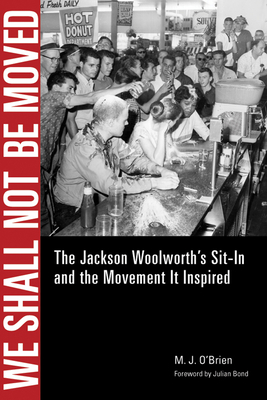
We Shall Not Be Moved: The Jackson Woolworth Sit-In and the Movement it Inspired by M.J. O’Brien is one of the 2014 Lillian Smith Book Award recipients.

The Lillian Smith Book Awards were established in 1968 by the Southern Regional Council to recognize authors whose books represent outstanding achievements demonstrating through literary merit and moral vision an honest representation of the South, its people, its problems, and its promise.

This year’s Forty-Sixth Anniversary Awards Ceremony is a partnership between the Southern Regional Council, the University of Georgia Libraries, and the Georgia Center for the Book. It will be presented in connection with the Decatur Book Festival at the DeKalb County Public Library in Decatur, Georgia on Sunday, August 31, 2015 at 2:30 p.m.

Below is a description of We Shall Not Be Moved:

Once in a great while, an image captures the essence of an era. Three people–one black, two white–sit at a lunch counter while a horde of cigarette smoking hot shots pour catsup, sugar, and other counter condiments on the sitters’ heads and down their backs. The image strikes a chord for all who lived through those turbulent times of a changing America. And for those too young to have endured that period, it evokes an era, not that long ago, when the ordinary act of getting a cup of coffee with a friend of another race could spark a riot.

We Shall Not Be Moved is a triple threat: part biography, part history, and largely just good old fashioned storytelling. The book enables the reader to get behind the iconic image of the Jackson Woolworth’s sit-in and into the hearts and minds of those participating in this harrowing event. It’s history from the bottom up. We Shall Not Be Moved tells the entire story of the Jackson Movement, which the sit-in sparked to life, and the three weeks of demonstrations that put Jackson on the front page of every major newspaper in America.

Sadly, this uprising led to severe retaliation. Two weeks after the Jackson Woolworth’s sit-in, Medgar Evers, the local leader of the movement, was assassinated. We Shall Not Be Moved chronicles this horrific event through first-person accounts of those who endured it, and then reveals how these movement figures carried on after their leader was taken down.

Filed Under: News

  • « Previous Page
  • 1
  • 2
  • 3
  • 4
  • 5
  • …
  • 8
  • Next Page »
A RESOURCE GUIDE FOR CLASSROOMS AND COMMUNITIES

Putting the Movement Back into Civil Rights Teaching

Learn more

Copyright © 2026 · Minimum Pro on Genesis Framework · WordPress · Log in